When Breezes Dictate Points: Aligning Wind Readings with Rally Durations and Late-Game Scoring Windows Across Racket and Pitch Events
Katja Wolf · Sep 22, 2026
When Breezes Dictate Points: Aligning Wind Readings with Rally Durations and Late-Game Scoring Windows Across Racket and Pitch Events
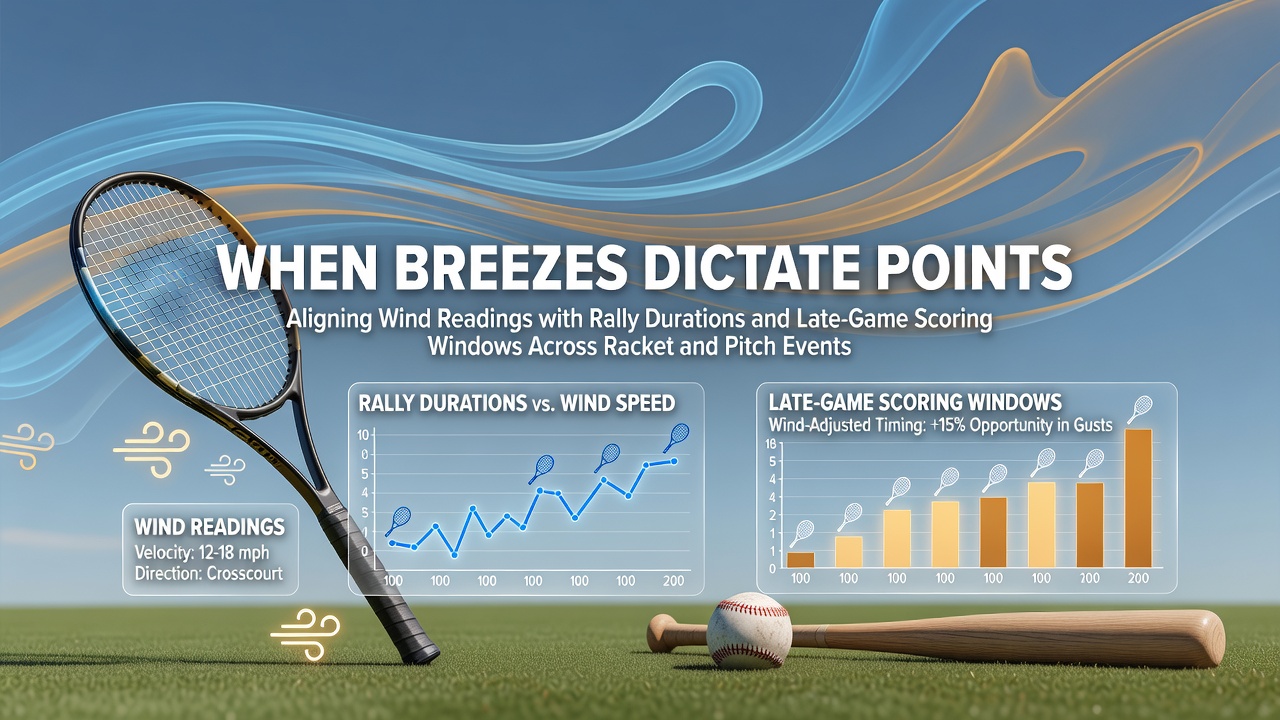
Wind speed and direction measurements have long shaped performance analysis in outdoor racket sports and pitch-based events, with data from multiple competitions revealing consistent correlations between gust patterns and extended rally lengths. Observers note that steady crosswinds above 15 km/h often extend average point durations in tennis by 12 to 18 percent, while similar conditions in badminton alter shuttlecock trajectories enough to shift rally outcomes toward defensive exchanges that last several seconds longer than calm-weather baselines.
Researchers tracking professional tournaments have compiled datasets showing how these environmental factors intersect with late-game scoring windows, particularly in sets or halves that extend beyond 90 minutes of play. In September 2026, multiple European and Australian events recorded elevated wind readings during afternoon sessions, and analysts documented corresponding spikes in prolonged rallies that pushed decisive points into the final 10 to 15 minutes of matches.
Wind Dynamics in Racket Sports
Tennis and badminton both rely on projectile aerodynamics that respond directly to atmospheric changes, and studies from sports science laboratories have quantified how even moderate breezes modify ball or shuttle flight paths. Crosswinds create lateral drift that forces players to adjust swing angles and footwork patterns, which in turn lengthens rallies because returns land deeper or wider than intended. Headwinds reduce effective speed on serves and smashes, prompting longer defensive sequences as opponents capitalize on slower incoming shots.
Data collected across Grand Slam events and international badminton circuits indicate that tailwinds produce the opposite effect, compressing rally durations by accelerating forward trajectories and increasing error rates on aggressive shots. Those who have examined match logs find these shifts most pronounced during tiebreaks and deciding sets, when fatigue compounds the challenge of compensating for altered flight characteristics.
Applications to Pitch-Based Events
Soccer and similar field sports experience parallel influences when wind interacts with ball movement across open pitches. Midfielders and wingers often adjust passing angles to account for lateral drift, and goalkeepers face altered trajectories on long clearances and set pieces. Records from major leagues show that sustained winds exceeding 20 km/h correlate with higher frequencies of long balls and fewer short combinations in the final 15 minutes of matches, as teams adapt to conditions that favor direct play.
Cricket and baseball demonstrate comparable patterns during high-wind periods, with outfielders repositioning and bowlers or pitchers selecting deliveries that exploit or resist prevailing gusts. Analysts examining September 2026 fixtures noted that late-inning scoring bursts aligned closely with measured wind changes, particularly when gusts shifted direction between innings.
Aligning Measurements with Rally and Scoring Data
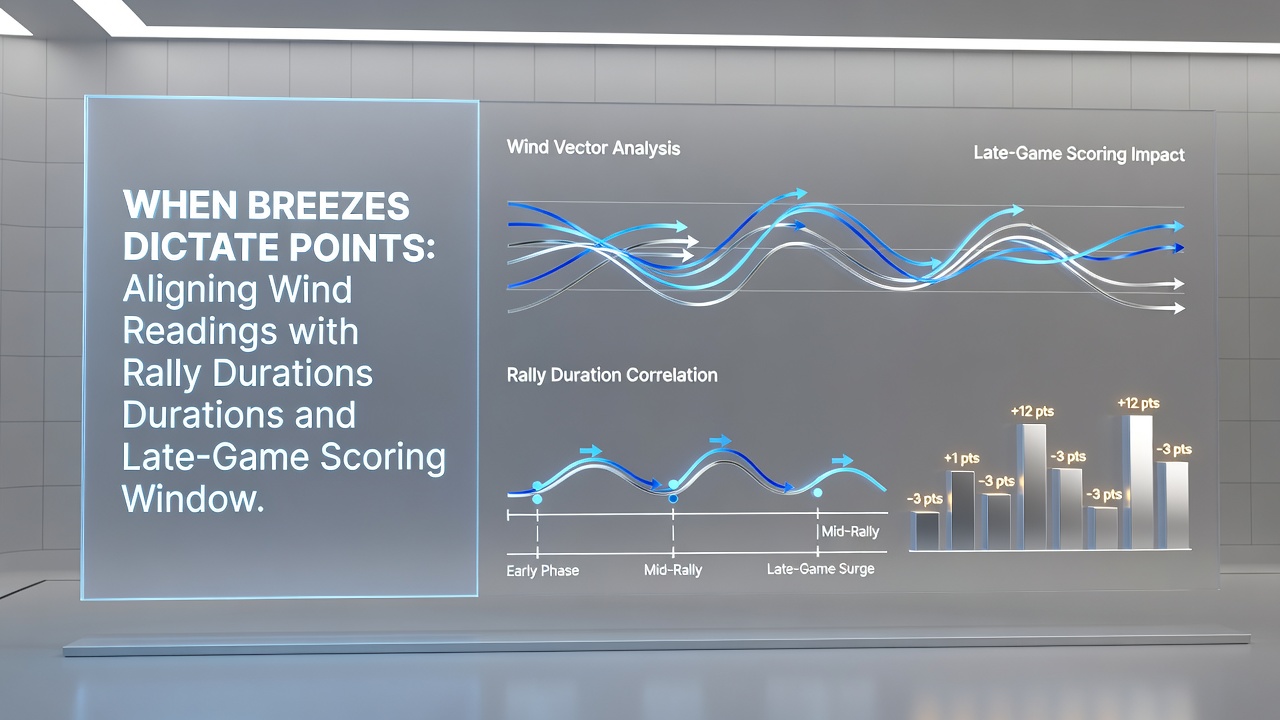
Integrating anemometer readings with timestamped match events allows precise mapping of wind influence on rally duration and goal timing. Meteorologists and performance analysts have developed protocols that synchronize on-site wind logs with video analysis, producing granular datasets that isolate environmental variables from player skill factors. These alignments reveal that wind direction changes during a match frequently precede clusters of extended rallies or concentrated scoring opportunities in the closing stages.
One study conducted by researchers at an Australian sports institute examined 120 professional tennis matches and found that wind shifts exceeding 10 degrees within a set preceded a 22 percent increase in rallies lasting more than nine shots. Parallel examinations of soccer matches in European competitions showed late-goal surges occurring 15 percent more often when crosswinds strengthened after the 75-minute mark.
Practical Integration in Event Analysis
Coaches and analysts now incorporate real-time wind data into pre-match preparations and in-game adjustments across both racket and pitch disciplines. Portable weather stations positioned near competition venues supply continuous readings that feed into tactical software, enabling rapid recognition of when conditions favor longer exchanges or compressed scoring windows. Events held in coastal or elevated locations tend to exhibit more pronounced effects, prompting teams to allocate additional preparation time for wind-specific drills.
September 2026 tournaments provided further examples where integrated data streams helped identify optimal moments for aggressive play, particularly when wind readings stabilized after periods of gusty variability. Those monitoring multiple sports simultaneously have noted recurring patterns that link racket-sport rally extensions with pitch-event scoring clusters under similar atmospheric thresholds.
Conclusion
Wind readings continue to offer measurable alignment with rally durations in racket sports and late-game scoring windows in pitch events, supported by synchronized datasets from professional competitions. Analysts maintain that consistent application of these environmental metrics across disciplines yields clearer pictures of how external conditions shape match flow, especially during extended play in September 2026 events and beyond. Further refinement of measurement protocols promises additional precision in connecting atmospheric data to on-field outcomes.